RIGID HVAC CO., LTD
SMALL COOLING SYSTEMS
Compact Vapor Compression Cooling for Space-Critical Applications
RIGID Small Cooling Systems are compact, compressor-based thermal management solutions engineered for applications where space, weight, DC power and cooling performance are critical.
Powered by RIGID variable-speed BLDC miniature compressors, our small cooling systems support 12V, 24V and 48V DC platforms and provide three primary cooling architectures:
- Liquid Cooling — for water, glycol and process-fluid cooling
- Air Cooling — for enclosed spaces, cabinets and equipment
- Direct Refrigerant Cooling (DX) — for cold plates, remote evaporators and direct refrigeration
RIGID provides standard cooling modules as well as customized OEM/ODM systems for medical devices, lasers, laboratory instruments, electronics, semiconductor equipment, battery systems, telecom, robotics and mobile equipment.
How do I choose a small cooling system?
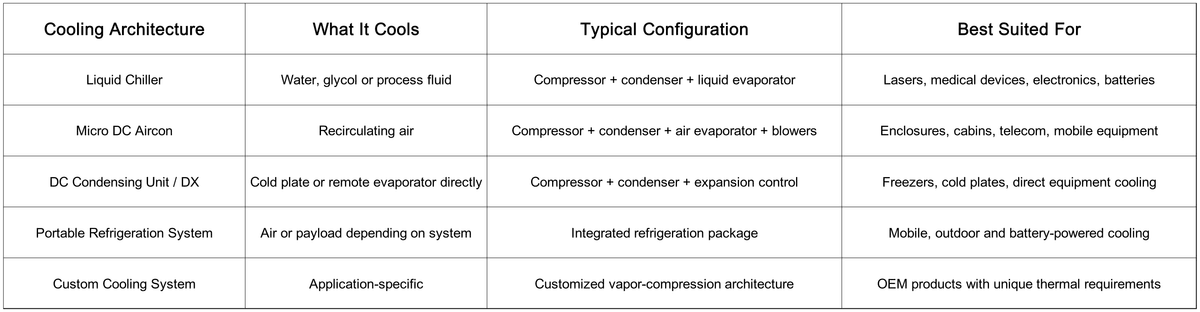
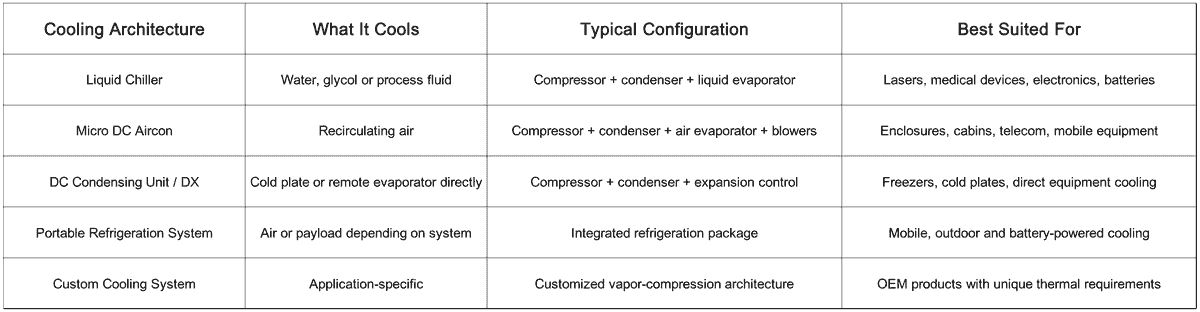
Choose a Liquid Chiller when you need to cool water, glycol or another circulating fluid. Choose Micro DC Aircon when you need to cool recirculating air inside an enclosure. Choose a DC Condensing Unit or Direct-Expansion System when refrigerant can cool the payload directly.
For accurate system selection, start with:
Heat load + target temperature + maximum ambient temperature + cooling method + DC voltage + available space.
BIG COOLING IN SMALL SPACES

Modern medical, photonics, semiconductor, electronics and battery systems are generating higher heat loads while becoming smaller and more mobile. Traditional refrigeration components can be difficult to integrate when equipment has strict limits on space, weight and electrical power.
RIGID addresses this challenge with compact vapor-compression technology built around miniature variable-speed BLDC compressors.
Key Engineering Advantages
- Compact System Architecture
Miniature compressors and optimized heat exchangers reduce the refrigeration system footprint for space-constrained equipment. - 12V / 24V / 48V DC Operation
Low-voltage DC configurations simplify integration into battery-powered, mobile, telecom and industrial DC platforms. - Variable-Speed Cooling
BLDC compressor speed can be adjusted according to thermal demand, allowing capacity modulation and more flexible temperature control. - Multiple Heat-Transfer Methods
Choose liquid, air or direct-refrigerant cooling according to how heat is transferred from your payload. - OEM Integration
Cooling capacity, heat exchanger, mechanical dimensions, piping, electrical interface and control architecture can be adapted to the application.
CHOOSE YOUR SMALL COOLING SYSTEM
One Refrigeration Platform. Multiple Cooling Architectures.
Mini Water Chiller
For water, glycol and process-fluid cooling
RIGID compact liquid chillers use vapor-compression refrigeration to remove heat from a circulating liquid.
Available evaporator configurations include:
- Plate heat exchanger
- Copper coil
- 316 stainless-steel coil
- Stainless-steel coaxial heat exchanger
Typical applications:
Laser systems · Medical equipment · Laboratory instruments · Electronics · Battery cold plates · Semiconductor equipment
Choose liquid cooling when:
Your equipment already uses a coolant loop, cold plate or liquid-cooled heat exchanger.For compact enclosure and air cooling
RIGID Micro DC Aircon modules use a refrigerant-to-air evaporator to cool recirculating air inside compact spaces and equipment enclosures.
Available power platforms include:
12V DC · 24V DC · 48V DC
Typical applications:
Telecom cabinets · Electronics enclosures · Drone docking stations · Small cabins · Mobile equipment · Battery-powered systems
Choose air cooling when:
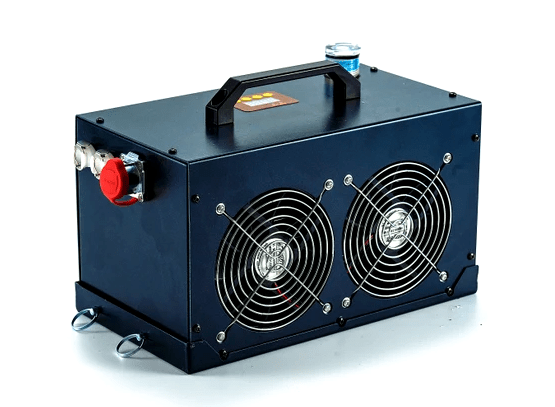
You need to control the air temperature inside an enclosed space rather than cool a liquid loop.Plug-and-Play Portable Cooling System
AlphaCooler is a packaged portable cooling solution designed for applications that need a more integrated system rather than a refrigeration subassembly.
Key characteristics include:
- 12V / 24V DC configurations
- AC power option
- Variable-speed compressor
- Digital controller
- Compact packaged design
- Quick-connect fluid interfaces
Typical applications include portable liquid cooling, mobile equipment, personal cooling and other field-deployed thermal-management systems.
The World's Smallest Size and Off-the-shelf Liquid Chiller with Digital Display
The 24V Cooler adopts a micro DC compressor, with the adjustable speed controller board. High performance, and a closed-loop liquid cooling in a small footprint.
- 5.0 kgs/11lbs
- Voltage: DC 24V
- Capacity: 100~550W
- Size: 339x208x235mm (13X8.2X9.2 inch)
- Powerful Compact Liquid Chiller Package
For direct refrigerant cooling
RIGID DC Condensing Units combine a variable-speed miniature compressor, condenser and refrigeration controls into a compact module that can connect to a remote evaporator or cold plate.
Unlike a liquid chiller, a direct-expansion system can eliminate the secondary coolant pump, reservoir and water/glycol circulation loop.
Typical applications:
Small freezers · Cold plates · Medical devices · Electronics · Portable refrigeration · Mobile cold storage · Specialty OEM refrigeration
Choose direct expansion when:
Refrigerant can be routed directly to the evaporator located at or near the thermal load.COMPACT LIQUID CHILLER OPTIONS
Select the Evaporator That Matches Your Fluid and Application
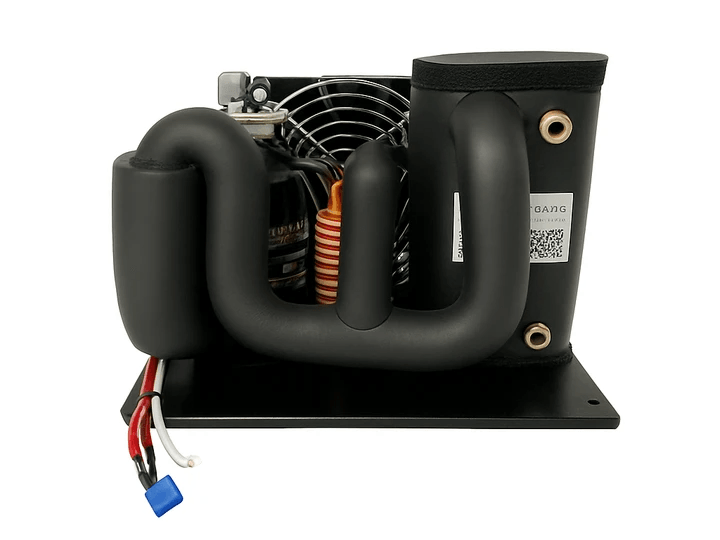
A lightweight copper-coil evaporator provides a simple and compact liquid-cooling architecture.
Key advantages
- Approx. 3 kg
- Compact footprint
- Lightweight heat exchanger
- Suitable for space- and weight-sensitive designs
Best suited for:
Laser equipment, portable cooling devices and medical/aesthetic systems where the coolant is compatible with copper.316 Stainless-Steel Coil Liquid Chiller
The stainless-steel coil configuration provides a compact liquid-cooling option for applications where fluid compatibility or corrosion resistance is important.
Typical characteristics
- Approx. 3 kg
- Approx. 275 × 175 × 138 mm
- 12V / 24V / 48V compressor configurations
Best suited for:
Medical, laboratory, aesthetic and specialty liquid-cooling applications.A compact refrigerant-to-liquid plate heat exchanger provides efficient heat transfer in a small package.
Typical specifications
- Approx. 3.5 kg
- Approx. 330 × 200 × 138 mm
- 12V / 24V / 48V compressor configurations
- Cooling capacity: 100–550W, depending on model and operating condition
Best suited for:
Laser cooling, laboratory instruments, electronics, battery cooling and medical equipment.A closed-loop liquid cooling system using an S316 stainless steel coaxial evaporator.
The coaxial configuration uses a 316 stainless-steel refrigerant-to-liquid heat exchanger for circulating-liquid cooling.
- Excellent heat exchange efficiency
- Compact and reliable structure
- Suitable for long-term operation
Best suited for:
Medical devices, laboratory equipment, precision instruments and applications requiring a robust stainless-steel fluid path.How to Select a Small Cooling System?
The correct cooling system should be selected according to what needs to be cooled, required cooling capacity, target temperature, ambient temperature, heat-transfer method and available installation space.

Why Choose RIGID Compact Cooling Technology?
Miniature Refrigeration Expertise
With more than a decade of experience focusing on compact refrigeration systems, RIGID has developed extensive expertise in:
Mini DC compressors
- Variable-speed refrigeration systems
- Compact heat exchangers
- Integrated liquid cooling systems
- Portable thermal management solutions
Our engineering team works closely with customers to develop optimized cooling solutions for medical equipment, laboratory instruments, laser systems, EV applications, telecom systems, and other specialized industries.

Integrated Design & Manufacturing Capability
RIGID controls the complete development process, including:
- Refrigeration system design
- Compressor integration
- Electronic control development
- Thermal performance testing
- Prototype validation
- Mass production
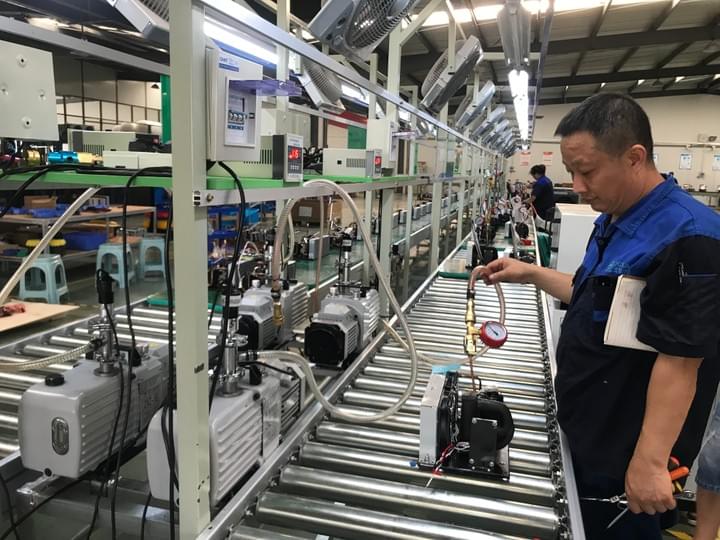
Our ISO 9001:2015 certified manufacturing facilities support both standard products and customized OEM projects.

RIGID Cooling Technology Advantages
Flexible OEM & ODM Solutions:
Every application has different thermal requirements.
RIGID provides:
- Cooling system customization
- Mechanical integration support
- Compressor selection
- Control system development
- Prototype testing
- Mass production support
From concept development to production, RIGID works as a thermal management partner for global innovators.

Engineering Compact Cooling Solutions Since 2010
With deep experience in miniature refrigeration technology, RIGID continues to develop innovative cooling solutions for industries where conventional refrigeration cannot meet size, efficiency, and reliability requirements.
Small Size. Powerful Cooling. Customized Solutions.
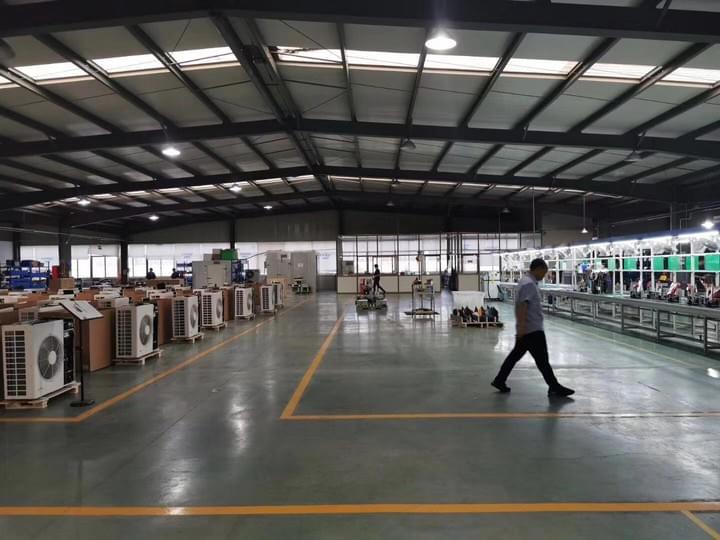
The factories meet ISO 9001: 2015 Quality Management Certificates.
HOW TO SELECT A SMALL COOLING SYSTEM
For initial system selection, provide:
1. What are you cooling?
Laser, medical device, battery, electronics, enclosure, fluid, freezer or another payload.2. How much heat must be removed?
Provide the continuous and peak thermal load in watts.3. What temperature is required?
Specify the target liquid, air, evaporator or payload temperature.4. What is the maximum ambient temperature?
5. How should the heat be removed?
Liquid cooling, air cooling or direct refrigerant cooling.6. What DC voltage is available?
12V, 24V, 48V or another supply.7. How much installation space is available?
Provide maximum length × width × height.*For liquid cooling, also provide:
Coolant + inlet temperature + required outlet temperature + flow rate
*For air cooling:
Return-air temperature + required supply-air temperature + airflow
*For direct-expansion cooling:
Evaporator temperature + cold-plate/evaporator dimensions + refrigerant-line distance
Start with six parameters:
Heat Load + Target Temperature + Maximum Ambient + Cooling Method + DC Voltage + Installation Space
RIGID engineers can use these conditions to recommend a standard compact cooling system or develop an application-specific OEM solution.
Your Thermal Challenge. Our Cooling Solution.
Whether you need a compact liquid chiller, DC refrigeration system, or a fully customized cooling platform, RIGID works with engineers to develop reliable solutions for demanding applications.
Small Size. Powerful Cooling. Engineered for Integration.

Miniature Vapor Compression Cooling Technology.
Unlike thermoelectric cooling, RIGID uses advanced vapor compression refrigeration technology to achieve higher cooling capacity and efficiency.
Our compact cooling units integrate:
- Miniature DC compressor
- High-efficiency heat exchangers
- Refrigeration control system
- Compact condenser and evaporator design
- Optimized thermal management architecture
The result is reliable active cooling for demanding applications where performance, size, and efficiency are critical.

Multiple approaches to meet different thermal requirements.
*Liquid Cooling Systems
Precise temperature control for medical, laboratory, laser, electronics, and EV applications.
*Air Conditioning Systems
Compact cooling solutions for enclosed spaces, mobile equipment, telecom, and EVs.
* Direct Refrigerant Cooling (DX)
Direct heat removal for higher efficiency and simpler system design.
*Miniature Refrigeration Technology
Compact DC compressor systems with high cooling performance.
*OEM & ODM Solutions
Customized cooling systems optimized for your size, power, and performance needs.

Your Thermal Challenge. Our Cooling Solution.
Whether you need a compact liquid chiller, DC refrigeration system, or a fully customized cooling platform, RIGID works with engineers to develop reliable solutions for demanding applications.
Our engineering team supports:
- Thermal design optimization
- Cooling capacity selection
- Mechanical integration
- Electrical interface customization
- Control system development
- Prototype testing
- Volume manufacturing
Small Size. Powerful Cooling. Engineered for Integration.
Specification Download PDF
RIGID DC LIQUID CHILLER
Compact and Reliable Small Liquid Cooling Solutions

HOW RIGID SMALL COOLING SYSTEMS WORK?
Miniature Vapor-Compression Refrigeration
RIGID small cooling systems use the same fundamental vapor-compression refrigeration cycle found in larger refrigeration systems, but integrate it into a compact DC-powered platform.
The basic circuit is: BLDC Compressor → Condenser → Expansion Device → Evaporator → Compressor
- The compressor circulates refrigerant through the system.
- The condenser rejects heat to the surrounding environment.
- The expansion device reduces refrigerant pressure.
- The evaporator absorbs heat from the liquid, air or payload being cooled.
The key difference between chiller types is the evaporator and heat-transfer:
- Liquid Chiller: Refrigerant → Liquid → Payload
- Micro DC Aircon: Refrigerant → Air → Enclosure
- Direct Expansion: Refrigerant → Payload
This architecture allows engineers to choose the most appropriate heat-transfer method without changing the fundamental vapor-compression principle.

WHY RIGID DEVELOP LIQUID CHILLER MODULE?
To meet the growing demand of small cooling systems, RIGID has developed compact liquid chiller modules for several customers. At first, these compact cooling modules are used for portable and compact water chiller and small device cooling.
Later, They are widely used in medical, aesthetic, laboratory, military who expressed a need for a compact, lightweight liquid chiller, which would meet the environmental stresses of the harshest environments while still provided sufficient cooling or heating. The system has both heating and cooling capabilities and circulates thermally regulated (+/- 0.5°C) coolant to a customer cold plate or heat exchanger.
The system has a built-in pump and reservoir to circulate the coolant, which allows system to function without the use of a fill kit. The system also has a communication port which allows the user to monitor the system performance and choose the operating temperature.
The compact design gives the user flexibility to design this chiller into their system or have is reside as a separate unit. Also, the cold plate, which ultimately removes heat from the payload, can exist remotely from the chiller and can be designed as appropriate.
The chiller has been designed to meet the requirements of mobile applications where it may besubjected to shock, vibration, and a variety of environmental conditions.

RIGID LIQUID CHILLER MODULE (LCM) PARAMETERS
RIGID Liquid Chiller Modules feature refrigerant delivered directly to a liquid loop. minimzing part count and maximizing thermal efficiency.
- DC pumps and reservoirs
- 100-550 Watts of cooling
- Liquid temperature ranges: 25°C to -20°C
- Temperature control
- Efficient isothermal heat transfer
- 4x to 6x more efficient than thermoelectrics
- Hermetically sealed system - no water leaks
- >90,000 hour MTBF

RIGID SMALL COOLING SYSTEM OTHER SPECIFICATIONS
1. Ambient Temperature
RIGID liquid chiller modules are usually intended for indoor use, and a minimum of +5ºC is required in order for proper lubrication. In 2017, RIGID has successfully developed T-tropical series mini compressor, which is able to work in 52 degree ambient temperature.
2. Electrical Power Available
RIGID liquid chiller modules are used in mobile or portable refrigeration systems. Its DC power is produced by batteries, fuel cells, vehicle alternators, solar panels, or from an AC inverter power supply. The compressor must be selected for use according to the DC voltage available. RIGID compressors are available in 12V, 24V and 48V versions.
3. Size and Cooling
RIGID liquid chiller modules are extremely small, high-performance for end users direct refrigeration devices. Its size is only 7.85x6.3x6.7 inch and weighting only 6.6 lbs. Current models produce as much as 30W to 250W.
RIGID SMALL COOLING SYSTEM WORKING PRINCIPLE
RIGID Small Cooling Systems deliver coolant to a secondary evaporator or heat exchange. The small chiller systems offer ultimate high thermal performance and ultimate flexibility.
- 100 to 550 W of cooling
- 0.1°C temperature control
- 4x to 6x more efficient than thermoelectrics
- Stand alone or integrated solutions
- Customized service is available
- >90,000 hours MTBF

WHY CHOOSE RIGID LIQUID CHILLER MODULE?
Rigid circulatory liquid chiller modules are self-contained high-efficient refrigeration compressor with R134A coolant, smallest condenser and evaporator, filter drier and driver board etc. All these refrigeration parts are all well integrated in one unit, sophisticated design by our skilled engineers. It serves as a source of chilled water for circulation through the water pipes, and the unit has smallest footprint and weight make it portability.
- Extremely small
- Extraordinary cooling performance
- Available for 12V, 24, 48V DC power supply
- Compact design providing reliable results to cooling and refrigeration
- Small & light weight configuration is ideal for small refrigeration application
- Variable speed dc compressor operate in battery, vehicle or solar power

RIGID LIQUID CHILLER MODULE FOR BODY COOLING
RIGID compact & mobile cooling chiller module (also named Liquid Chiller Module), is also used for extreme hot environment and confined space, besides small cooling devices and equipment. After more than 8 years experience for small dc refrigeration system. RIGID has successfully engineered and developed sophisticated cooling systems to handle OEM and ODM project.
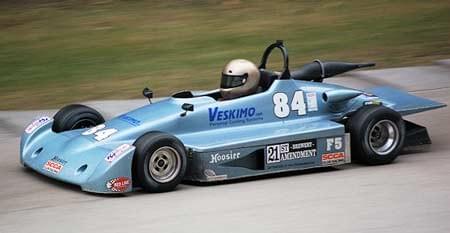
In 2017, RIGID introduced a powerful and compact plate type liquid chiller, which meets market's need for personal cooling in the race car industry. Temperatures on the track can reach over 60°C (140°F) and the drivers need to operate their car precisely in these extreme conditions. The size of RIGID's compressor keeps the cooling system lightweight. The efficiency of a vapor-compression solution, yields a great advantage over thermo-electric personal cooling systems.
FAQ
Liquid Chiller Modules
1. What’s RIGID Small Cooling Systems?
RIGID Small Cooling Systems are compact vapor-compression refrigeration modules designed for OEM equipment where space, weight, DC power consumption and cooling performance are critical.
Instead of offering only one cooling architecture, RIGID provides multiple compact thermal-management approaches:
- Liquid cooling systems
- Micro DC air conditioning
- Direct-expansion (DX) refrigeration
- DC condensing units
- Portable refrigeration systems
- Customized OEM cooling systems
Depending on product architecture and model, RIGID small cooling systems operate from 12V, 24V or 48V DC power and use variable-speed BLDC miniature compressors.
2. MOQ for custom liquid chiller?
Minimum order: 20 units for customization.
3. Are chillers pre-charged of refrigerant?
Yes — all units ship filled with refrigerant and oil.
4. What type of small cooling system should I use for my application?
Start by identifying how heat should be transferred away from the payload.
Choose a Liquid Chiller when:
Your equipment already uses water, glycol or another circulating coolant.
Typical applications include:
- Lasers
- Medical equipment
- Aesthetic devices
- Electronics
- Batteries
- Laboratory instruments
- Cold plates
The refrigeration system cools a circulating liquid, which then removes heat from the payload.
Choose a Micro DC Air Conditioner when:
The application requires direct cooling of recirculating air inside an enclosure or compact space.
Typical applications include:
- Telecom cabinets
- Electronics enclosures
- Small cabins
- Drone docking stations
- Mobile equipment
- Vehicle compartments
Choose a DC Condensing Unit / Direct-Expansion System when:
Refrigerant can be routed directly to an evaporator or cold plate located at the heat source.
Typical applications include:
- Small freezers
- Refrigerated compartments
- Cold plates
- Medical equipment
- Direct electronics cooling
- Specialty refrigeration
Direct expansion can eliminate the secondary coolant pump, reservoir and associated liquid tubing.
The best architecture depends on the payload, temperature requirement, cooling capacity and mechanical layout.
5. What is the difference between liquid cooling, air cooling and direct refrigerant cooling?
These three architectures transfer heat differently.
Liquid Cooling
The refrigeration system cools water, glycol or another process fluid. The liquid then circulates between the chiller and the heat source.
Typical architecture:
Compressor → condenser → expansion device → liquid evaporator → compressor
plus a secondary coolant loop:
Chiller → pump → payload → chiller
Liquid cooling is useful when heat must be transported away from a laser, battery, medical device or electronic component.
Air Cooling
The evaporator cools recirculating air directly.
Typical architecture:
Compressor → condenser → expansion device → air evaporator → compressor
A blower moves air through the evaporator and into the enclosure.
Direct Refrigerant / DX Cooling
The refrigerant evaporator is located directly at or near the heat source. This can eliminate:
- Coolant pump
- Reservoir
- Secondary liquid loop
- Additional liquid-to-refrigerant heat exchanger
DX cooling can therefore simplify the system when the application allows refrigerant lines to reach the payload.
6. What are applications of Small Cooling System?
RIGID LCM technology is widely used in:
* Medical & Life Science
Diagnostic equipment
Laboratory instruments
* Photonics & Laser
Laser processing systems
* Optical equipment
Precision instruments
* Electronics & Semiconductor
Electronic enclosures
* Semiconductor equipment
High-performance computing
* Mobility & Energy
EV battery cooling
* Mobile platforms
Robotics
* Defense & Aerospace
Ruggedized equipment
* Field-deployed systems
Portable systems
7. How do I control the liquid chiller?
Same driver board logic: potentiometer, 0–5V input, PWM, or TTL.
8. What are Small Cooling Systems' Typical Applications?
Typical applications include:
- Medical and aesthetic equipment
- Laser cooling
- Electronics thermal management
- Battery cooling
- Telecom equipment
- Laboratory instruments
- Portable refrigeration
- Small freezers
- Drone and robotics systems
- Vehicle and mobile equipment
- Personal cooling
- Outdoor and off-grid equipment
The correct cooling system should be selected according to what needs to be cooled, required cooling capacity, target temperature, ambient temperature, heat-transfer method and available installation space.
9. What refrigerant is used in liquid chiller?
R134a, R290, R1234yf
10. What cooling capacity can a small DC cooling system provide?
Cooling capacity depends on the selected architecture, compressor and operating condition.
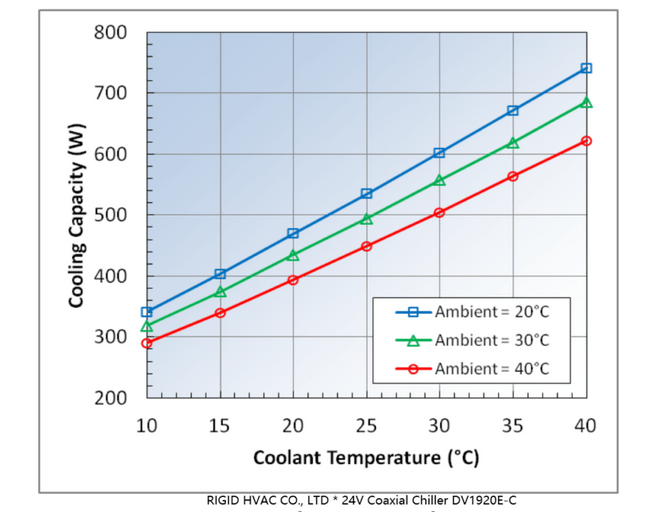
RIGID's miniature cooling platforms include systems in approximately the 100–550W class, while other compact RIGID product families extend beyond this range.
For example, miniature liquid-cooling systems can use variable-speed BLDC compressors with different displacement and capacity classes. However, a system described as “550W” does not necessarily provide 550W under every condition.
Actual cooling capacity depends on:
- Evaporating temperature
- Condensing temperature
- Ambient temperature
- Compressor speed
- Refrigerant
- Coolant temperature
- Airflow or liquid flow
- Heat-exchanger performance
For engineering selection, specify the required heat removal in watts together with the target temperature and maximum ambient temperature.
11. How do I adjust flow rate of liquid chiller?
Depends on your pump setup; RIGID chillers include guidance for recommended pumps.
12. What small cooling system should I use for a laser or medical device?
For lasers and medical equipment, liquid cooling is often appropriate when the payload has a liquid-cooled cold plate or internal coolant circuit.
RIGID provides several compact liquid-chiller architectures, including:
- Plate heat-exchanger chillers
- Copper-coil chillers
- Stainless-steel coil chillers
- Coaxial chillers
- Integrated temperature-controlled liquid coolers
A typical system uses a miniature BLDC compressor to cool water, glycol or another process fluid. For selection, provide:
- Heat load in watts
- Flow rate
- Coolant type
- DC supply voltage
- Coolant inlet temperature
- Required outlet temperature
- Maximum ambient temperature
- Required temperature stability
- Available installation space
If the application does not require a secondary coolant loop, a direct-expansion system may provide a simpler alternative.
13. What small cooling system should I use for electronics or battery cooling?
Yes.
RIGID compact cooling systems use miniature BLDC compressor technology and are available in 12V, 24V and 48V configurations depending on product and model.
Potential power sources include:
- Battery packs
- Vehicle electrical systems
- Solar-plus-battery systems
- Fuel-cell DC systems
- Telecom DC buses
- Regulated DC power supplies
The complete electrical load includes more than the compressor. Engineers should account for:
- Compressor input
- Controller
- Condenser fan
- Evaporator fan
- Coolant pump where applicable
- Other auxiliary electronics
Battery sizing should therefore be based on complete-system power consumption and required runtime.
For example:
Required battery energy ≈ average system input power × required operating hours
Additional margin should be included for conversion losses, battery operating limits and environmental conditions.
14. Is a compressor-based small cooling system better than a Peltier/thermoelectric cooler?
It depends on the application.
Thermoelectric cooling can be attractive for low cooling loads because it has no refrigerant compressor and can offer simple solid-state temperature control.
Vapor-compression refrigeration uses:
Compressor → condenser → expansion device → evaporator
and is often worth evaluating when cooling loads increase into the hundreds of watts or when electrical efficiency and battery runtime become important. The correct comparison should be made at complete-system level.
Compare:
- Required cooling capacity
- Target temperature
- Ambient temperature
- Electrical input
- COP
- Noise
- Weight
- Package size
- Heat-rejection requirement
- Temperature-control accuracy
- System complexity
A compressor-based system should not be selected merely because it has a higher nominal cooling capacity.
The complete thermal and electrical requirements determine which architecture is more appropriate.
15. Can a small cooling system operate below ambient temperature?
Yes.
Unlike passive air cooling, a vapor-compression refrigeration system can cool a payload or coolant below ambient temperature when the system is properly designed for the required operating condition.
However, below-ambient cooling introduces additional engineering considerations. These include:
- Condensation
- Dew point
- Insulation
- Moisture management
- Evaporator icing
- Coolant freeze protection
- Refrigeration operating envelope
For example, when a liquid loop operates below the surrounding dew point, coolant lines and cold surfaces may require insulation to prevent condensation.
For sub-zero liquid temperatures, coolant selection also becomes important.
Water alone may not be appropriate, and a glycol mixture or another suitable process fluid may be required.
16. Do you provide OEM branding?
Yes — RIGID supports OEM & ODM service.
17. Can the liquid chiller be run on batteries?
Yes — compatible with DC battery packs.
18. What is the lifespan of liquid chiller?
Compressor core: 10+ years with proper maintenance.
19. How do I buy samples?
Order directly from the online store, E-Shop.
20. What if I need extra cooling power?
Request custom configurations or parallel compressors.
21. What is AlphaCooler?
DC 12V & 24V, and AC 110V power supply are available. The cooler kit adopts variable speed inverter compressors, with the adjustable speed at 1500 ~ 6500 rpm, is suitable for miniature freezer systems and small mobile refrigeration applications. Features: Compact Size, Excellent Power and Portability.
- 6.8 kgs/15lbs;
- Size: 300x170x170mm (11.8x6.7x6.7 inch);
- Compact, Light, Rugged compact and portable cooler kit;
- All necessary parts included as well as digital display, plug and play.
Parts included:
1pcxPower cord+2pcsxLiquid pipe+4pcsxQuick connector+1pcxDustproof net.
Notice: Product color is subject to inventory. RIGID accepts customer's design and logo when the order reaches 20 units.
22. Can RIGID customize a small cooling system instead of supplying a standard module?
Yes.
RIGID supports OEM and ODM development when a standard cooling module does not fit the application's thermal, mechanical or electrical requirements.
Customization can include:
- Cooling capacity
- DC voltage
- Compressor selection
- Refrigerant
- Condenser size
- Evaporator type
- Liquid fittings
- Airflow direction
- Fan configuration
- Mechanical dimensions
- Refrigerant piping
- Controller interface
- Temperature sensors
- Enclosure design
A typical OEM development process includes:
Requirements → thermal evaluation → compressor/system selection → mechanical design → prototype → testing/validation → production.
Providing accurate operating conditions at the beginning of the project reduces prototype iterations and makes compressor and heat-exchanger selection more reliable.
23. What information does RIGID need to select a small cooling system for my project?
Start with the application rather than a RIGID model number. Provide:
- What equipment or payload needs cooling?
- Required heat removal in watts
- Target temperature
- Maximum ambient temperature
- Available DC voltage
- Available installation dimensions
- Required operating duration
- Environmental conditions
- Expected annual production volume
Then define the preferred heat-transfer architecture: Air cooling, liquid cooling, or direct refrigerant cooling.
For liquid cooling, also provide:
- Coolant type
- Coolant inlet temperature
- Required outlet temperature
- Coolant flow rate
- Required temperature stability
- For air cooling, provide:
- Return-air temperature
- Required supply-air temperature
- Airflow
- Enclosure/cabin heat load
For direct refrigeration, provide:
- Required evaporator temperature
- Cold-plate or evaporator dimensions
- Distance between cooling unit and evaporator
- Refrigerant-line requirements
For initial engineering selection, the most useful information is:
Heat load + target temperature + maximum ambient temperature + cooling method + DC voltage + available installation space.
RIGID can then determine whether the application is best served by a liquid chiller, Micro DC Aircon, DC condensing unit, direct-expansion system or customized cooling platform.
24. How RIGID Small Cooling Systems performance?
Cooling Capacity Depends on the Operating Point
A compressor or cooling module does not produce one fixed cooling capacity under every condition.Actual cooling performance depends on:
- Evaporating temperature
- Condensing temperature
- Maximum ambient temperature
- Compressor speed
- Refrigerant
- Heat-exchanger design
- Airflow or coolant flow
- Target coolant or air temperature
RIGID miniature liquid-cooling platforms include approximately 100–550W-class systems, depending on model and operating condition. Other RIGID compact cooling families extend beyond this range for applications requiring higher thermal capacity.
For meaningful system selection, cooling capacity should be evaluated at the application's actual operating condition rather than from maximum wattage alone.
Example
A system rated at 550W under one refrigeration condition may provide substantially less cooling when required to produce very low coolant temperatures or operate at high ambient temperature.
This is why RIGID asks customers to provide both the heat load and operating temperatures before final system selection.
25. What are major applications of RIGID Small Cooling Systems?
From Miniature Compressor to Complete Thermal System.
RIGID has focused on miniature refrigeration and compact cooling technology since 2010. Unlike suppliers that provide only individual refrigeration components, RIGID develops both the compressor technology and the complete cooling architecture around the application.
Our engineering capabilities include:
- Miniature BLDC compressor development
- Refrigeration system design
- Heat-exchanger integration
- Electronic compressor control
- Thermal performance testing
- Mechanical integration
- Prototype development
- OEM/ODM customization
- Volume manufacturing
RIGID operates an ISO 9001:2015 certified quality-management system and supports customers from initial thermal requirements through prototype validation and production.
Standard Product or Custom Cooling System?
- Choose a standard RIGID module when an existing cooling architecture meets your thermal and mechanical requirements.
- Choose an OEM/ODM cooling solution when you require a different:
- Cooling capacity
- Operating temperature
- DC voltage
- Heat exchanger
- Refrigerant
- Mechanical envelope
- Airflow direction
- Fluid connection
- Control interface
- Environmental design
The development process typically follows:
Requirements → Thermal Evaluation → System Selection → Mechanical Integration → Prototype → Validation → Production
26. How to select a Small Cooling System?
Send These Parameters for an Engineering Recommendation.
For initial system selection, provide:
1. What are you cooling?
Laser, medical device, battery, electronics, enclosure, fluid, freezer or another payload.2. How much heat must be removed?
Provide the continuous and peak thermal load in watts.3. What temperature is required?
Specify the target liquid, air, evaporator or payload temperature.4. What is the maximum ambient temperature?
5. How should the heat be removed?
Liquid cooling, air cooling or direct refrigerant cooling.6. What DC voltage is available?
12V, 24V, 48V or another supply.7. How much installation space is available?
Provide maximum length × width × height.1. For liquid cooling, also provide:
Coolant + inlet temperature + required outlet temperature + flow rate
2. For air cooling:
Return-air temperature + required supply-air temperature + airflow
3. For direct-expansion cooling:
Evaporator temperature + cold-plate/evaporator dimensions + refrigerant-line distance
Start with six parameters:
Heat Load + Target Temperature + Maximum Ambient + Cooling Method + DC Voltage + Installation Space
RIGID engineers can use these conditions to recommend a standard compact cooling system or develop an application-specific OEM solution.
Standard Products and Custom Solutions
Established in 2010, RIGID is the manufacturer who's behind many popular brands in the US. RIGID's vision is to set the benchmark standard for the micro cooling industry. We are a China manufacturer and supplier of compact cooling systems, working in close cooperation with the leading United States and European manufacturers of Air-conditioning & Refrigeration.
In addition to offering standard products including Micro DC Aircon (ruggedized air conditioner modules for compact and confined space cooling), Liquid Chiller Modules (battery-driven compact refrigeration systems that our customers integrate into their applications), and DC Condensing Units (world's small direct cooling units used by customers in small freezer, medical, laser, and electronics cooling). RIGID also custom design or modify refrigeration systems for most customers' specific applications.
Let our engineering team develop the perfect cooling solution for you!

Certificates | Download | Contact Us | Our History | Return & Exchange
RIGID Technology * © Copyright 2010-2025 * RIGID Cooling * All rights reserved.