RIGID HVAC CO., LTD


Free Piston Stirling Cryocooler
FPSC (Free Piston Stirling Cryocooler) is a new type of completely CFC-free, high-efficiency, energy-saving, and environmental protection Cooler, which uses a small amount of helium as the coolant.
FPSC also is a kind of Magnetic Levitation Compressor (MagLev solution). But it is an even more efficient chiller compressor, with low energy cost, and consumption. It is small and portable, and it is widely used for precise temperature control for under -170℃ maximum.
RIGID, one of the leading Chinese companies in terms of innovation, designed a Free-Piston Stirling cooler – FPSC. The unit takes the entire product to a whole new level where it can save a lot of energy and significantly improve efficiency. The default version of Stirling coolers includes pistons, heat exchangers, and compression spaces. But we see technological advancements in all industries, such as Biotech, Pharmaceutical, Food, Energy, Chemical, Medical, Bio-Science, logistics, and Metrology.
RIGID Free-Piston Stirling Cryocooler is a game-changer for next-generation ultra-deep freezing! Read More...
Product Models
Stirling Cooler, which we refer to as the FPSC (Free Piston Stirling Cooler). RIGID has prepared a product lineup of Stirling Coolers that can cool air temp to 30℃ ~ -160℃ using helium gas as the refrigerant. The Stirling Cooler, which differs from a compressor, is a cooling system that continuously repeats gas compression and adiabatic expansion and uses naturally occurring helium gas as the refrigerant.
Helium is a very safe gas that is entirely harmless to our global environment. The typical use of our Stirling Cooler is in portable freezers, and refrigerators, but we are also developing a product lineup for use in laboratory equipment and in medical devices used for low-temperature distribution of goods.
Capacity: 40W
Input Power: 12V
N.W: 2.2kg (4.8lbs)Coolant: Helium=2.5g
Size: ODФ86mm x Length260mm
Working Condition: 0℃~+60℃(32℉~140℉)
Installation: Any direction is workableTemperature Sensor of Controller: -1℃ to -99℃
Temp Range in Cold Fin (Cold part): -100℃~ 0℃
Capacity: 80W
Input Power: 24V
N.W: 2.2kg (4.8lbs)Coolant: Helium=3.0 g
Size: ODФ86mm x Length270mm
Working Condition: 0℃~+60℃ (32℉~140℉)Installation: Any direction is workable
Temperature Sensor of Controller: -1℃ to -99℃
Temp Range in Cold Fin (Cold part): -140℃~ 0℃Capacity: 100W
N.W: 4.0kg (8.8lbs)
Coolant: Helium=3.0g
12V~30V DC Power Supply
External Size: 132mm×132mmx336mm (LxWxH)
Working Condition: 0℃~+60℃ (32℉~140℉)
Installation: Any direction is workable
Temperature Sensor of Controller: 0℃ to -140℃
Temp Range in Cold Fin (Cold part): -160℃ ~0℃FPSC Cryocooler Parts

KF50 Flange

Cold Adapter

Cold Adapter

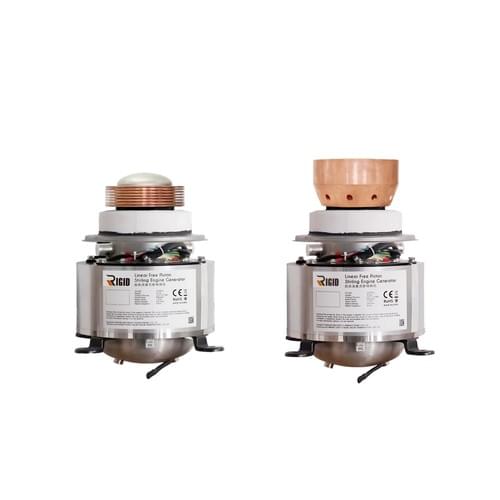
St. St. Cold Head

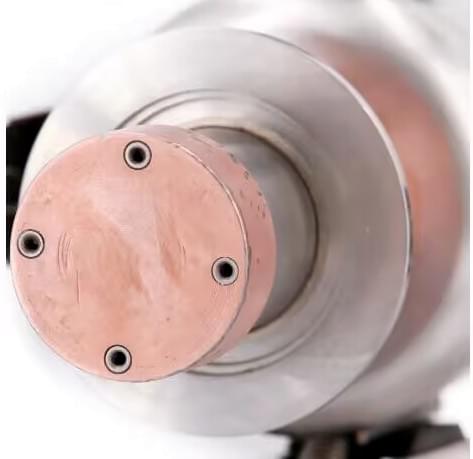
Copper Cold Head

Copper Cold Head
Cooling Performance Curve
Using safe and environmentally friendly Helium gas as the refrigerant. With the international advanced Free-piston Stirling technology, RIGID Stirling Coolers have a minimum temperature that can be controlled to -160℃, ±0.1℃. Furthermore, the Cryocooler has the smallest footprints, which is very suitable for deep, and fast low-temperature transportation and cold chain logistics.
Cryocooler Applications

To cool air in a compact and confined area!
1Direct Cooling with Conductive Connection
Cooling Efficiency - Limited:
The aluminum plate has uneven cooling, resulting in a relatively high thermal resistance between the aluminum plate and the inside air. This limits the effective cooling volume.
Impact of Frost - Minimal:
When the aluminum plate surface is covered with frost, the surface area exposed to the inside air doesn't decrease significantly.
Other Considerations:
Vibration from the FPSC can directly transfer to the insulated container and aluminum plate, potentially causing noise issues.
2Indirect Cooling with Heat Exchanger+Fan
Cooling Efficiency - Optimal:
The thermal resistance between the cold side of the FPSC and the heat exchanger is minimal. Additionally, the thermal resistance within the air is also low.
Impact of Frost on Cooling - Significant:
When frost accumulates, it blocks the airflow, reducing the exposed surface area of the finned plate to the inside air. This results in a decrease in cooling performance.
Other Considerations:
1. It's important to choose a fan motor that can operate efficiently at the desired working temperature.
2. The heat generated by the fan motor contributes an extra heat load, potentially lowering the overall cooling performance.
3Direct Cooling with Thermosyphon
Cooling Efficiency - Improved:
The aluminum plate is cooled more evenly compared to "1". Thanks to two-phase heat transport, there's minimal thermal resistance between the aluminum plate and FPSC.
Impact of Frost on Cooling - Minimal:
Even when the aluminum plate surface is covered with frost, the exposed surface area to the inside air remains largely unchanged.
Other Considerations:
1. It's important to identify and have the right working fluid ready for the desired operating temperature.
2. Make sure to have the necessary equipment for charging the working fluid.
4Direct Cooling with Brine/Glycol/Nitrogen
Cooling Efficiency - Improved:
A copper tube is attached to the aluminum plate with more flexibility than in "3". This results in more uniform cooling compared to "3", although it does lead to a slightly higher thermal resistance.
Impact of Frost on Cooling - Minimal:
Even when the aluminum plate surface is covered with frost, the exposed surface area to the inside air remains largely unchanged.
Other Considerations:
1. Make sure to have suitable brine and a pump ready for the desired operating or storage temperature.
2. The heat from the pump motor contributes extra heat, potentially reducing the overall cooling performance.
3. Take precautions to prevent potential brine leakage.
Key Features
A Game-Changer For Next-Generation Deep Freezing - State Of The Art!
Evaporating Temp Below -99 ℃
Temperature down to -99℃ in few mins. It's suitable for strict temperature control. Depending on the heat mass, cooling capacity and speed can be fine-tuned.
Temperature Below -160 ℃
No OIL, No CFC.
It adopts helium as coolant, MagLev technology. It can reach maximum ultra deep temp -160℃ (only RS100), with 50% energy savings.
Most Compact & Lightweight
RIGID stirling cooler can be installed on various applications, especially for portable equipment because of its compactness and lightweight.
Completed & Integrated
RIGID Stirling cooler, drive board, temperature control and fan are integrated in one unit. You can install it into your system or equipment as it is.
Zero Maintenance & Less Engineering
Integrated configuration, no solder joints, which greatly improves reliability while reducing after-sales maintenance.
Long Continuous Operation
Stirling convertor sets achieves 14-Year continuous operation milestone, record-breaking power convertor.
Refrigerant CFC Free & Oil Free
Freon or other substitutes have been completely eliminated. No need oil operation, no wear, low failure rate.
All-Round Installation Available
Installation angle is not required, can be 360° rotation. Shock resistant, less vibration, ultra low working noise.


APPLICATIONS
RIGID ULT Stirling Cold Solutions Are Trusted in a Variety of Applications.
RIGID Stirling Coolers not only are the most environmentally sustainable ultra-low temperature (ULT) coolers on the market, but they are also the most cost-effective with the lowest life cycle costs. You can benefit from breakthrough Stirling cooler technology without compromising cooling performance across the entire research organization with your devices or equipment.

Military & Aerospace

Medical & Laboratory

Bio-tech Pharma

Semiconductor

Vaccine Transportation

Smart Cold Chain

Portable Freezer

X-Ray Machines

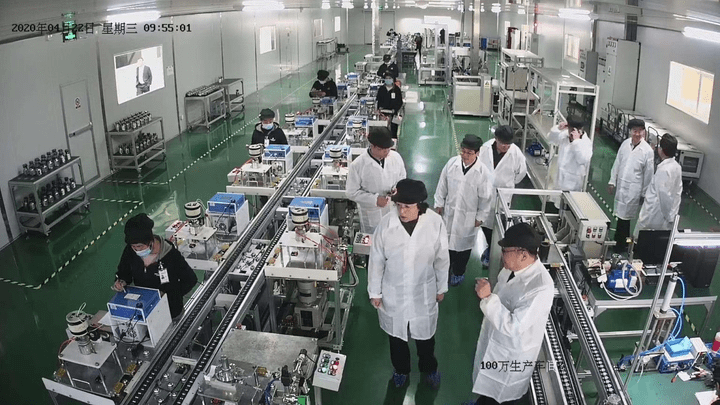
Stirling Cooler Factory
Stirling technology has been used in military and aerospace fields for more than 20 years.
However, due to its high price, it has not been used in the mass market, and there are not many related application products.
After 3 years of efforts, RIGID engaged with a China researchinstitue and has successfully launched a series of affordable quality products for deep freezing.
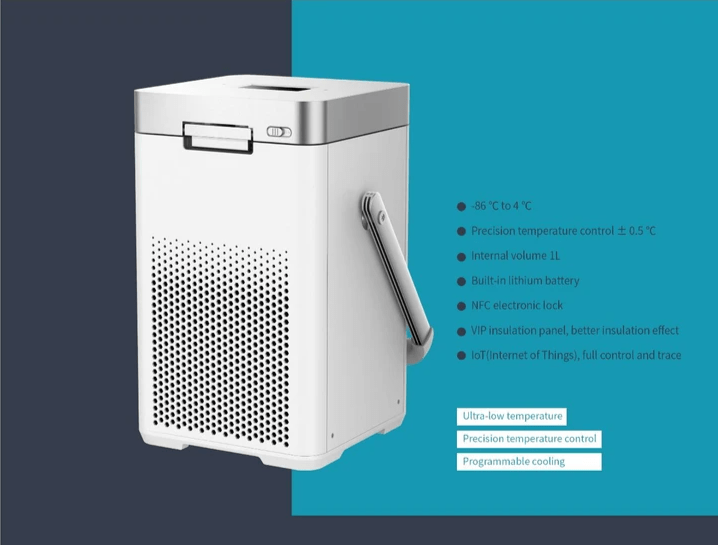
-86℃ Stirling Freezer
Model: CPF01L86
Temperature -86℃ and portable freezer. Best choice for vaccine and drug transportation and storage.

Our R&D Team
Ultra-low Transportable Cryogenic Freezers are specifically designed for Vaccine and drug transportation and storage.

Stirling Power Freezer
Freezers For all kinds of vaccines.
Covid-19 Vaccine Freezer Storage and Transportation.
Set the temperature you need from 8℃ to -80℃.
Vaccine Freezer
RIGID Can Provide Off-the-Shelf Products Designed And Produce By Us And Our Partners.
CONTACT US
For further information contact Rigid Stirling today!
Stirling Cryocooler FAQ
1. What's Free Piston Stirling Cooler (FPSC)?
Stirling Cooler is a completely sealed heat transfer system that has only two moving parts (a piston and a displacer), and which can use helium as the working coolant.
The Stirling cycle is a thermodynamic closed cycle that was invented in 1816 by a Scottish minister, Robert Stirling.
2. How does a Stirling Cooler work?
A Stirling cryocooler utilizes the Stirling cycle to convert electricity into the movement of heat from the cold tip towards the heat rejecter.
3. What's Stirling engine used for?
Stirling engines are energy conversion devices that may be used as prime movers, refrigerating engines, or heat pumps. Currently, they are used commercially as cryogenic cooling systems, deep and fast freezing, cold chain logistics, and are under development as low noise, low emission automotive engines.
4. How cold can RIGID Stirling Cooler get?
Temperature down to -99℃ in a few mins. And with our largest model RS100, the maximum temperature can reach to minus -160℃.
5. Which gas is used in Stirling Cooler?
Although air is the traditional working fluid for Stirling engines, Hydrogen and Helium are also employed for improved performance due to their better thermal properties.
6. What's the main part of Stirling Cooler?
It can be done, and you can get about 5,000 hours out of that engine. But you have wear mechanisms and you can't design an engine like that to last forever. If you want a long life, on the order of ten years or twenty years of continuous operation, then you have to eliminate all mechanisms of wear.
7. How do I control a Stirling Cooler?
The Cryocooler controller has two operating modes: temperature control mode and power control mode. In temperature control mode the user will input a desired cold tip temperature and the controller will strive to maintain that temperature. In power control mode the user will input a desired cryocooler power level and the controller will maintain that level. The cryocooler utilizes an RTD temperature sensor for control. The RTD should be placed on the cryocooler cold tip or very close to it.
8. How long can a Stirling Cooler run?
The Cryocooler design life is 5 years, and this is the recommended lifetime, although the current mean time to failure (MTTF) is over 200,000 hours, roughly 23 years.
9. What do I need besides the Stirling cryocooler?
This depends on your applications. Most clients will need to cool their heat exchangers like Aluminum plates or Thermosyphon adapters. Both of these are available as permanent or removable options. Some clients will design their own evaporator or air fin to transfer cold. RIGID engineers can help you to find the best solution.
Most customers will also require a vacuum flange to attach the Stirling Cryocooler to their Dewar or cryostat. For more information, feel free to contact Ann Wee | ann@rigidhvac.com
10. What maintenance Stirling Cooler is required?
The cryocooler components are enclosed in a welded pressure vessel and there is no way to access them. There is no maintenance required on the cryocooler. We do recommend keeping the air fins free of debris on units that have cooling fins.
11. What's Stirling Cooler input power?
- RS40: 12V DC
- RS80: 12V DC
- RS100: 12V DC
12. Where can I buy Stirling Cooler?
- RS40: https://www.rigidhvac.com/store/products/free-piston-stirling-cooler-rs40
- RS80: https://www.rigidhvac.com/store/products/free-piston-stirling-cooler-rs80
- RS100: https://www.rigidhvac.com/store/products/free-piston-stirling-cooler-rs100
13. Can I use the system in a vacuum?
The cryocooler can operate in a vacuum with no issues. The controller, however, has capacitors that are not vacuum rated and could burst, thus the controller is not approved for use in a vacuum.
14. Are there any special mounting requirements for RIGID Stirling Cooler?
There is NO mounting requirement for the Stirling, any direction is workable.
Besides, RIGID Stirling Cryocoolers offers several options for mounting. There are threaded hole patterns in the body of the cooler that is intended for mounting integration. The cooler can be mounted to the system via the cryostat flange either vertically or horizontally with the cryocooler cantilevered from the flange. Note: Care must be taken to not secure the cryocooler to the system structure in such a way that will induce stress in the body of the cryocooler.
15. Can I get a custom cold tip or evaporator?
Yes, RIGID offers clients cold tips or heat exchangers, like Alumimum cold plates, and cold fin. So that they can easily modify the cold tip (or acceptor) configuration. A custom cold tip will NOT increase the cryocooler lead time. We will deliver it along with the Stirling cooler.

Certificates | Download | Contact Us | Our History | Return & Exchange
RIGID Technology * © Copyright 2010-2025 * RIGID Cooling * All rights reserved.