
RIGID HVAC CO., LTD
DC Compressor
The Best Cooling Capacity for Smallest Footprints on the Market

Miniature
12V DC Compressor
Micro Size, Silent Performance — Variable Speed DC Inverter Compressors Built for Efficiency.
Direct Current Compressors
RIGID is the miniature compressor innovation leader in China. We keep looking for novel solutions in compact and portable cooling applications. At the same time, RIGID keeps pursuing innovative solutions to effectively reduce carbon dioxide emissions and promoted the use of low-GWP refrigerants. Our aims are eco-friendly and meet the high requirements of the eco-design directive UE2015-1095.
RIGID Inverter technology (DC) is the latest evolution of technology concerning the electro motors of the compressors. The dc compressor motor is controlled by an inverter, which continuously regulates the temperature.
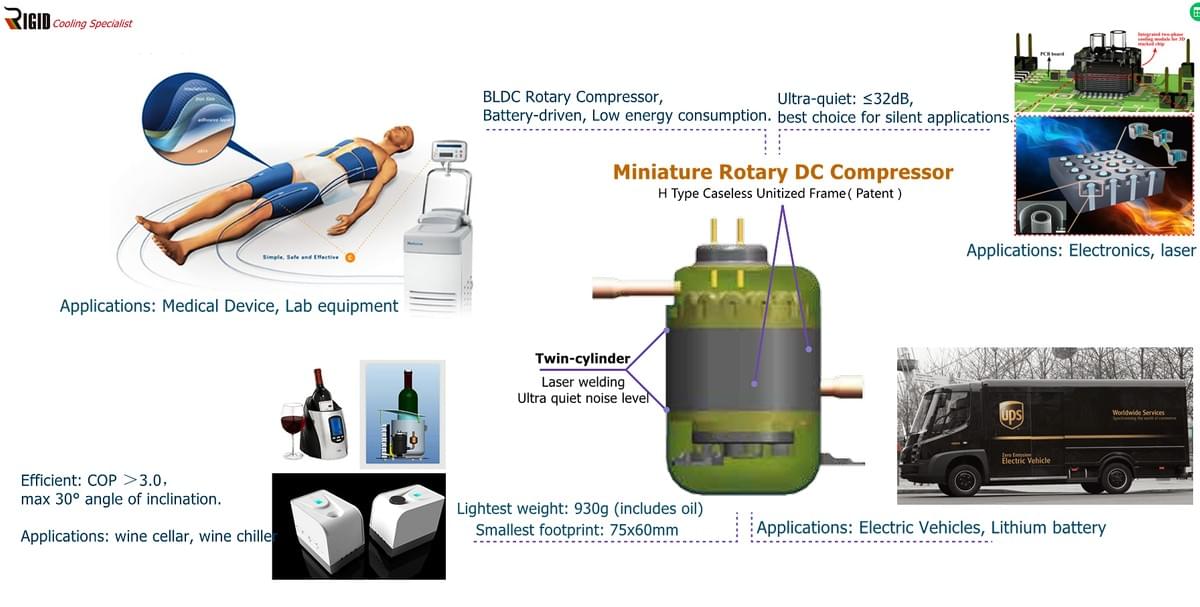
In the field of mobile refrigeration, RIGID has excelled with its DC compressors for micro refrigeration, portable air conditioner, mobile boxes, cars, vans, boats, trucks, electric vehicles, etc. In the food, laser, medical, military, green energy, and telecommunication industries. RIGID DC compressor series offers excellent performance.
Reduce running costs in cooling and save up to 450W per hour!
Advantages of DC Compressors
Low Starting Current
High starting torque, high slip, and low amperes draw.
Design for Mobile Applications
Compact size, run on 24V/48V DC power supply.
Inverter BLDC Motor
Variable Speeds ranging from 1,800 to 5,500rpm.
Excellent COP ≥ 3.46 (W/W)
Excellent cooling capacity, low energy consumption.
Miniature 24V / 48V DC Compressor
Tailored for Small and Light Commercial LBP/MBP/HBP Applications
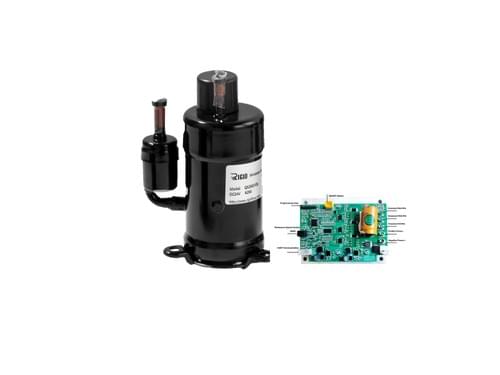
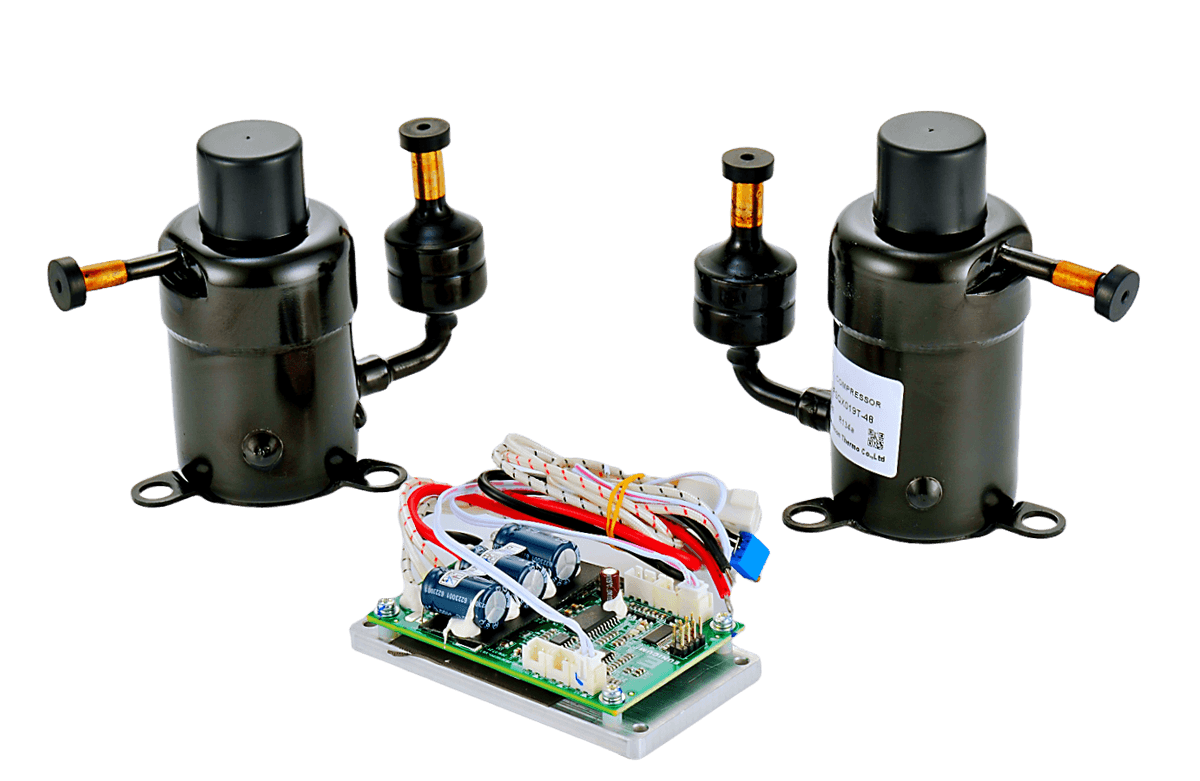
RIGID tiny DC compressors have many advantages: small size, lightweight, high efficiency, low vibration, and high reliability. The 48V DC compressor - QX8803VDL can be said to be the king of micro compressors, with the world's largest cooling capacity of 1,067 W.
In addition, the micro dc compressor QX8803VDL uses DC frequency conversion technology combined with an M-cylinder motor, which is better at low noise and high-reliability technology and has an excellent performance in high energy efficiency, low noise, and long life. Both in the commercial refrigeration and home refrigeration field, we have won a high reputation for their reliable quality and advanced technology.RIGID BLDC direct current compressors feature an optimal pump that operates quietly, while also providing excellent performance. In addition to heat pumps, air conditioners, cabinet & telecommunications, and commercial cooling applications, the 48V DC compressor QX8803VDL is also well suited for various compact Air Conditioning and Refrigeration applications.
Compared to traditional compressors, RIGID variable-speed DC compressors offer highly efficient and energy-saving features. Unlike a fixed-speed compressor that constantly runs at 100%, the rotary inverter DC compressors deliver only as much air as it needs for cooling, saving significant amounts of electricity.
RIGID is continuously developing direct current DC compressors, not only to discover new technological advances but also to improve and reach our most successful results when operating them.
Contact RIGID
Any Messages From You Will Receive Our Prompt Reply In 1h.
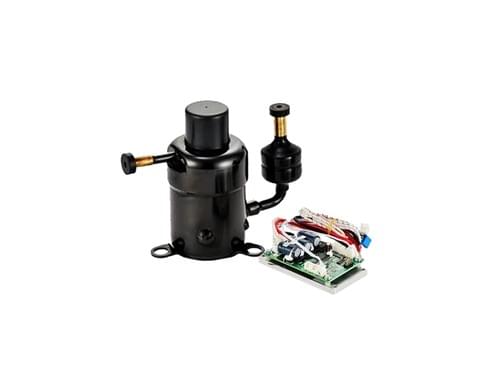
24V DC Compressor, QX3002VDL
Nominal Capacity: ≥530W (1,807Btu)
24V DC
1.4 kgs /3.1 lbs
Displacement: 3.0 ml/rev
Refrigerant: R134A / R513A
Working Current: 8.6A
Rated Capacity: 530 W / 1,807 Btu
Compressor Rated Input: 208 W / 709 Btu
COP (Coefficient Of Performance): 2.55 W/W
Size: 103.5 x 65 mm (High x Diameter)
Variable speed drive board: (1,800~5,500 rpm)
Drive board included
48V DC Compressor, QX3003VDL
Nominal Capacity: ≥544W (1,855Btu)
48V DC
1.4 kgs /3.1 lbs
Displacement: 3.0 ml/rev
Refrigerant: R134A / R513A
Working Current: 4.5A (Max 6A)
Rated Capacity: 544 W / 1,855 Btu
Compressor Rated Input: 217 W / 740 Btu
COP (Coefficient Of Performance): 2.51 W/W
Size: 103.5 x 65 mm (High x Diameter)
Variable speed drive board: (1,800~5,500 rpm)
Drive board included
48V DC Compressor, QX8803VDL
Nominal Capacity: ≥1,067W (3,638Btu)
48V DC
4.7 kgs / 10.3 lbs
Working Current: 6.06A
Displacement: 8.8 ml/rev
Refrigerant: R134A / R513A
Rated Capacity: 1,067 W / 3,638 Btu
Compressor Rated Input: 309 W / 1,054 Btu
COP (Coefficient Of Performance): 3.46 W/W
Size: 185 x 94.4 mm (High x Diameter)
Variable speed drive board: (1,800~4,000 rpm)
Drive board included
DC Compressor Features and Benefits
If you rely on battery power for up to 16 hours a day, be sure that your DC compressor will ever cool the battery and ensure it can last a long time. Reduce maintenance and replacement costs by securing your signal. Battery drain is a big issue,
RIGID Battery-driven DC compressors will allow you to:
- Energy-efficient direct current DC compressor with a high COP.
- Ensure maximum performance by simplifying the overall system design.
- Create a cooling system that can run on battery, solar cell, and wind turbine without converting the current to alternating current.
*Compared to other solutions that rely on AC and 230V AC conversion compressors.
Features and Benefits:
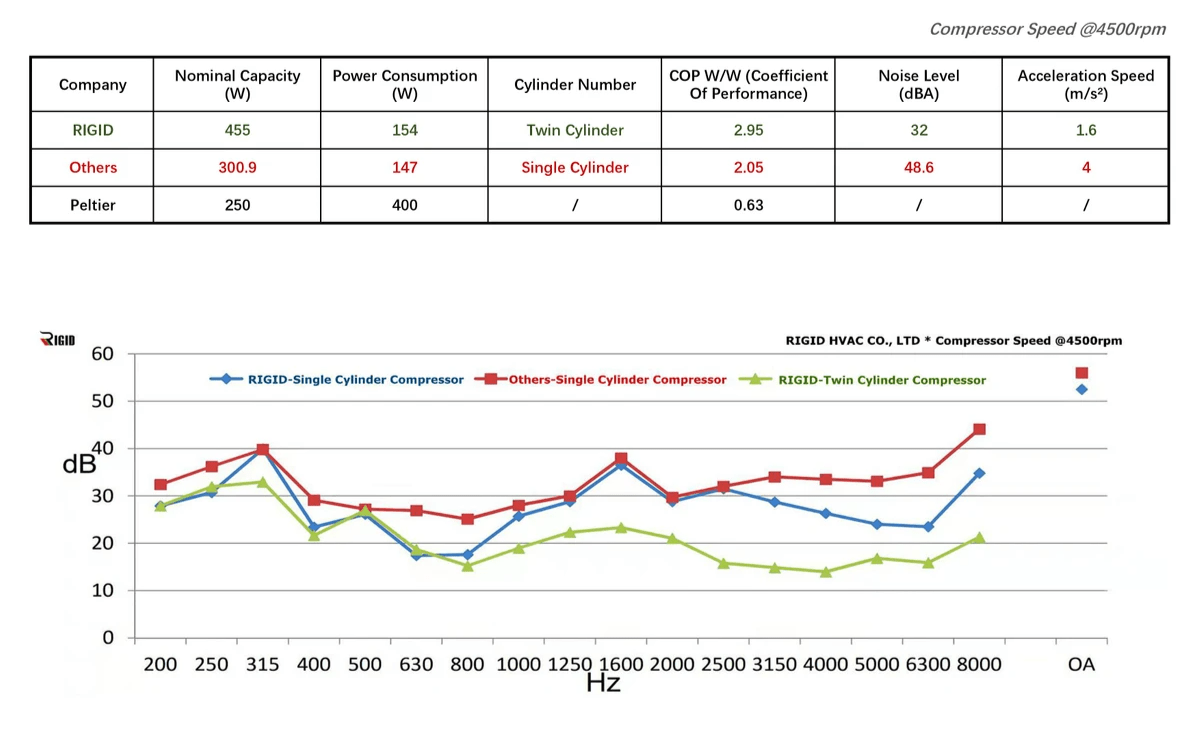
- Outstanding Performance COP>2.95.
- Ultra-quiet working noise level (32dBA).
- Miniature DC compressors apply for mobile cooling applications.
- Highly reliable and efficient solutions safeguard cabinet, food, medical, and telecommunication.
- Variable speed driver control unit with built-in speed control, ON&OFF switch, thermostat signal, thermal protection, constant-current control, and safety against overload.

DC Compressor Drive Board
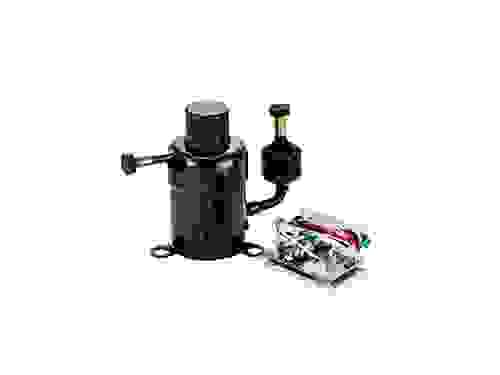
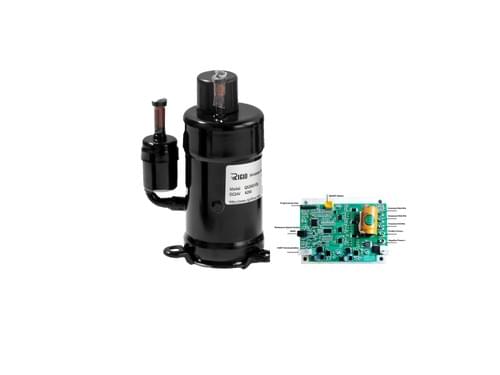
RIGID DC Compressors combine with variable speed drive board. It is easy to integrate the drive board (PCB) into your application if you need sophisticated functions or want to control them with your software.
The PCB drive board is a variable speed drive. This allows the cooling capacity of the system to be adjusted by increasing or decreasing the compressor speed. The compressor drive board utilizes a user-supplied 0-5 VDC analog signal to set the compressor speed. The firmware has a minimum speed of 2,000 RPM (0.7 VDC or lower) and a maximum speed of 6,000 RPM (4.5 VDC or higher).
The voltage to RPM relationship is linear between 0.7 and 4.5 V so the following equation can be used: S = 1132×V+1408.
* Where S is compressor speed (RPM) and V is the control voltage (VDC).
DC Compressor Applications -
Mobile Cooling & Compact Refrigeration
Online Store
Buy nowTwin Cylinder Compressor QX2802VDL (24V, R134A)$290.00 - $300.00
Buy nowTwin Cylinder Compressor QX2802VDL-T (24V, R290)$320.00 - $330.00
Buy nowTwin Cylinder Compressor QX3802VDL (24V, R134A)$350.00 - $360.00
Buy nowTwin Cylinder Compressor QX3802VDL-T (24V, R290)$380.00 - $390.00
Buy nowTwin Cylinder Compressor QX3803VDL (48V, R134A)$350.00 - $360.00
Buy nowTwin Cylinder Compressor QX3803VDL-T (48V, R290)$380.00 - $390.00
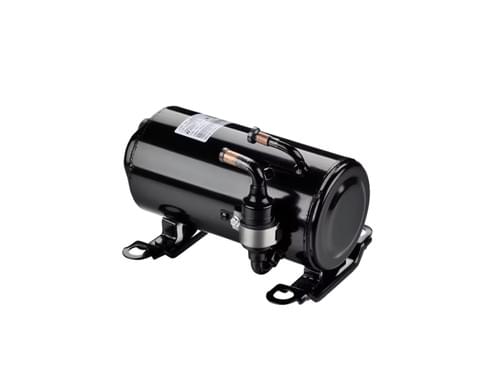
Buy now7.5cc Horizontal DC Compressor$410.00 - $420.00
Buy now9.6cc Horizontal DC Compressor$430.00 - $440.00
Buy now15.0cc Horizontal DC Compressor$450.00 - $460.00
Buy nowHorizontal Compressor QH3802VDL (24V, R134a)$380.00
Buy nowHorizontal Compressor QH2802VDL (24V, R134a)$320.00
Buy nowMini Compressor QX1901VDL (12V)$210.00
Buy nowMini Compressor QX1902VDL (24V)$220.00 - $250.00
Buy nowMini Compressor QX1903VDL (48V)$230.00
Buy nowMini Compressor QX3202VDL (24V)$290.00
Buy nowMini Compressor QX2002VDL (24V)$260.00
Buy nowMini Compressor QX3002VDL (24V)$290.00
Buy nowMini Compressor QX3003VDL (48V)$300.00
Buy nowHigh-Power Mini Compressor QX8848VDL (48V)$410.00 - $500.00- Contact Us
MINI COMPRESSORS FAQ
1. WHAT’S MINI COMPRESSOR?
RIGID mini compressor is a key component of refrigeration and air conditioning applications. Compressors are the “heart” of such appliances, comparable to a car engine or even the human heart. A compressor is a mechanical device that increases the pressure of a gas by reducing its volume. RIGID Technologies now presents the lightest, more compact, and more efficient BLDC Inverter Compressor.
2. HOW TO SELECT COMPRESSOR?
The selection of a compressor should be considered the following factors:
- Evaporator Temperature
- Cooling Capacity
- Refrigerant Type
- Ambient Temperature
- Electrical Power Available
- Compressor and Drive Cooling
3. RIGID MINI COMPRESSOR FEATURES
- Super small volume: 56.5 x 78 mm (LxH)
- Super lightweight: 720g (1.6lbs)
- Use brushless motor, 12V, 24V, and 48V are available
- Driver board: variable speed ranges from 1800 to 6500 rpm
- Low vibration with anti-vibration cushions
- High-temperature working conditions can work under 52-degree ambient temperature.
4. RIGID MINI COMPRESSOR APPLICATION
The minimum evaporating temperature and the condensing temperature allow RIGID mini compressor to apply applications of LBP, MBP, and HBP.
Low Back Pressure systems such as freezers have evaporator temperatures below -20ºC (-4ºF). Medium Back Pressure systems such as food coolers or beverage dispensers have evaporator temperatures higher than -20ºC (-4ºF). High Back Pressure systems such as chillers and air conditioners have evaporator temperatures higher than -5ºC (+23ºF).
5. RIGID MINI COMPRESSOR SERIES
6. RIGID MINI COMPRESSOR PARAMETERS
6.1 Cooling Capacity
This is usually defined as the specified nominal cooling capacity at normal working conditions of the system in watts, according to evaporating and condensing temperatures. The capacity is determined by the mass flow rate of the refrigerant, which depends on the compressor’s displacement, RPM, and volumetric efficiency. RIGID miniature compressor refrigeration capacity ranges from 100W to 800W.6.2 Refrigerant Type
Refrigerant selection can be made on the basis of availability, performance, and ecological considerations. RIGID BLDC rotary compressors have been verified for use with R134a refrigerant.6.3 Ambient Temperature
The compressor must be selected in order to ensure it’s suitable to operate at the highest expected ambient temperature. RIGID mini compressors are usually intended for indoor use, and a minimum of +5ºC is required in order for proper lubrication. In 2017, RIGID has successfully developed the T-tropical series mini compressor, which is able to work at 52-degree ambient temperature.6.4 Electrical Power Available
RIGID DC compressors are used in mobile or portable refrigeration systems. Its DC power is produced by batteries, fuel cells, vehicle alternators, solar panels, or from an AC inverter power supply. The compressor must be selected for use according to the DC voltage available. RIGID compressors are available in 12V, 24V, and 48V versions.6.5 Size and Cooling
RIGID mini compressors are extremely small, high-performance rotary refrigeration compressors. Its size is only an adult's fist and weighs only 1.6 to 2.2 lbs. Current models produce as much as 100W to 800W of cooling under standard ASHRAE conditions, using a single-cylinder configuration. Compatible with various refrigerants and running on 12, 24, and 48VDC, or AC power through an AC-DC conversion, the new compressors are starting a new trend in various compact mobile cooling systems as well as small foot-print countertop appliances with cooling or ice-making capabilities.6.6 RIGID Mini Compressor Cooling Capacity and COP
Coefficient Of Performance: Up to 3.25W/W
7. WHY CHOOSE RIGID MINI COMPRESSOR?
The attached photo Table 1. shows the comparative sizes of RIGID miniature rotary compressor with a reciprocating DC compressor. RIGID mini dc compressor (right) is about 30 percent less in size than that of a traditional reciprocating compressor (left), which has been widely used around the world for a long time. It is almost inconceivable to most people at first glance that the small compressor on the right (1.5 lbs) actually has a 30 percent higher capacity than the larger compressor on the left (9.5 lbs)! A comparison of key performance parameters is also shown in
Table 2. For appliance designers, an important but seldom used (since they were pretty much all the same!) parameter is that of cooling power density, both volumetric and weight.
RIGID rotary compressor is a new type bldc mini compressor. It has 17 times the cooling power for the same volume, and 10.5 times the cooling power for the same weight. An obvious conclusion to be drawn from this realization is that large space and weight savings can be achieved using the miniature compressor. Such factors have historically been prized in mobile refrigeration systems only. Now, even though highly unusual for a DC-powered compressor, due to the weight and volume, the miniature compressors are being considered in various stationary applications, such as household countertop appliances; beverage dispensers; ice makers; ice cream machines, coffee machines, etc., where the small compressor size is highly desired to make the footprint of the appliance small.
When RIGID miniature compressor is used in a refrigeration system together with a high-performance condenser and evaporator, the complete refrigeration system can be incorporated within a package as small as 100 in3 (1.64 liters). This allows a major space reallocation in the cabinet, namely much less volume for the refrigeration system and considerably more volume for product storage space. There’s also a weight reduction of approximately 10 lbs (4.54 kg) just from the use of mini-compressors. But for the most part, space savings are usually considered more important than weight savings in most refrigerated appliances.
A small vapor compression cooling system using RIGID miniature compressor would have even larger performance and efficiency advantages over thermoelectric coolers often used in various products in the absence of small compressors before. Above the cooling capacity range of 100W, the vapor compression-based system will be far superior to the thermoelectric systems: ¼ to ½ the weight and volume, and 1/3 to ½ the power consumption compared to thermoelectric systems.
8. RIGID MINI COMPRESSOR APPLICATION
RIGID mini compressors have the size, weight, and durability that make them well-suited to mobile or portable applications. Numerous mobile and small cooling appliances can benefit from the size and weight reduction of the dc mini compressors.
Laser
Medical Device
Beverage Cooling
Small Refrigerators
Fleet Lithium Battery
EV/RV Battery Cooling
Military/Racing/Camping
Electronic Components
Mini-Chilled Water Systems
Portable DC Air Conditioner
Electronics Cooling Systems
Aesthetic & Medicine Device
Telecommunications Cooling
Portable Mini Cooling Systems
Miniature Refrigeration/Freezer Systems
Thermally-Controlled Shipping Containers
Portable and Small Cooling Applications
Automotive (Electric Vehicle, Vessel, Helicopter)
9. RIGID MINI COMPRESSOR STORAGE AND HANDLING
RIGID’s compressors are built to order. Prior to installation, compressors should be stored in an upright position to prevent oil from entering the suction or discharge tubes. If compressors are to be stored in inventory for long periods of time, they should be stored in climate chambers or storage areas that can control both temperature and humidity.
RIGID compressors are built with high-precision parts that are susceptible to chemical attack and corrosion from contaminants in ambient air. Compressors are always shipped with a low-pressure nitrogen blanket sealed with rubber plugs to maintain this pressure and prevent internal parts from exposure to moisture and other contaminants. If long shelf life is anticipated, it is important to maintain an inert atmosphere to prevent internal corrosion or chemical attack.
10. COMPRESSOR UNPACKING
All compressors shipped from RIGID are charged with 25cc of RL-32H oil, are evacuated, sealed with low-pressure nitrogen, and capped. In addition to the compressor, other system components should be internally dried, sealed, and stored in an inert atmosphere until installation, preferably no more than 15 minutes from assembling of components.
Remove the compressor from its packaging while keeping it in an upright position. Failure to keep the compressor upright can result in the flow of oil into the suction accumulator and process connections, which can cause brazing problems. The compressor must also remain upright while assembling the grommets in the mounting bracket to the base plate.
11. PREPARATION OF REFRIGERATION SYSTEM COMPONENTS
The cleaning and removal of solid substances and non-condensable and the removal of moisture and other gas contaminants in all components of the refrigeration system are key to successful compressor operation and long life. In addition, the use of R134a with new polyester oils has been accompanied by new stricter standards in comparison with CFC or HCFC refrigerants. Any non-compatible products that can contaminate these refrigerants and polyester oils including chlorine compounds and non-ester-based oils need to be eliminated. Other system components such as tubing, evaporators, condensers, receivers, valves, capillaries, and separators need to have these contaminants removed before the system is assembled.
RIGID recommends that all components remain sealed as long as possible before assembly, performing the brazing no more than 15 minutes after exposure to ambient.
It is important to avoid residual oil during brazing by blowing out components with nitrogen or dry air, with a dew point lower than -40ºF. Internal oil on surfaces of the suction or discharge tubes can cause difficulty in brazing, and even more hazardous, it can introduce contaminants into the system from ‘cracking of oil’.
The filter drier needs to be protected from absorption of ambient humidity during assembly of the system components using the following practices:
Remove protective caps just prior to brazing
For filters supplied without protective caps in hermetic boxes, these must also be protected to avoid moisture absorption before brazing.
If the drier does not have complete water absorption in the molecular sieve, then moisture can circulate freely in the system with the following effects:Ice Buildup: Reduces the cross-sectional area of a capillary tube or TX valve;
Acid Buildup: Causes serious attack in a compressor and on the molecular sieve in the filter drier;
Oil Contamination Acidification: reduces lubrication, changes oil color, a buildup of sludge, and poor lubrication of the compressor;RIGID is not responsible for damage to its compressors from the introduction of such contaminants.
12. REFRIGERANT & OIL USE GUIDE
RIGID mini compressors have been designed and tested for operation with R134A, R1234YF, and R290 refrigerants. Some users may want to employ other refrigerants or refrigerant blends, and other refrigerants may perform quite well. However, due to case design pressure considerations, refrigerants that have a maximum working pressure greater than 350 psi (24.13 bar) are not recommended.
If other refrigerants are to be used, the compressor should be thoroughly tested and evaluated with those refrigerants to verify reliability with expected conditions in the intended application. Because of the wide differences in refrigeration systems with different working fluids, the reliability of all equipment should be evaluated for appropriate life through field tests.
Rotary compressors perform best when the pressure ratio between the high and low sides of the compressor is less than 8:1. When the pressure ratio exceeds this value, the compressor’s coefficient of performance (COP) is adversely affected. Good refrigeration practice requires that careful evaluation of the refrigeration system and evaporator conditions be specified and that an appropriate refrigerant is selected to avoid excessive pressure differential.
13. R134A REFRIGERANT
R134a (tetrafluoroethylene) is a replacement for R12 in applications with medium and high evaporator temperatures in Aspen’s compressors.
Its physical properties are: Molecular Weight – 102 Critical Temperature – 101.1ºC Critical Pressure – 40.6 bar Boiling Point -26.5ºCThis refrigerant also requires the exclusive use of polyester oil (POE) as a lubricant. R134a refrigerant is associated with strict requirements for the internal cleanliness of the cooling system. In addition to chlorine and water, solid residues must be carefully removed including dust, metal particles, etc., which can damage the compressor. The recommended lubricating oil is POE RL 68H. This lubricant is highly hygroscopic (water absorbing) which can cause the formation of acid residues. When present, these acid residues can create a blockage in the capillary tube and reduce lubricity in the compressor.
The level of moisture in the refrigeration system should be below 40 ppm. It is recommended that a filter dryer compatible with R134a and POE be installed with the capability to remove moisture from the system to below 20 ppm. The compressor and other components should remain sealed until they’re ready to use. The compressor and other system components should not be open to the ambient for more than 15 minutes. Good refrigeration practice also calls for system evacuation of both low and high sides, achieving a minimum vacuum level of 0.14 bar (100 ! Hg).
14. R134A REFRIGERANT CHARGE
Following the system evacuation, it must be charged with refrigerant. For a low capacity system, as little as 40 grams might be used, while as much as 120 grams might be used in a high capacity system. After the refrigerant is pumped into the system, it is wise to wait 5-10 minutes before starting the compressor to allow refrigerant evaporation and avoid the ingestion of liquid into the compressor. For high charge levels, the system should be equipped with a liquid receiver. An accumulator should always be used with rotary compressors to minimize liquid intake in the compressor.
For each system, the optimum refrigerant charge should be determined by controlled testing in order to obtain the best working conditions and to avoid the return of liquid refrigerant to the compressor. In order to evaluate system performance, instrumentation should be added at certain locations to record key data. Recommended data points to be recorded include the following:
15. OIL MANAGEMENT
Even the most experienced refrigeration technicians need to read these instructions carefully since the quantity of oil used in RIGID compressors is much less than that found in other types. Some lubricating oil will travel with the refrigerant in any refrigeration system. Thus, it is imperative that they be miscible and fully soluble in one another at all temperatures. This provides good oil return and lubricity for the compressor while avoiding heat transfer losses in the evaporator. During the prototyping of the refrigeration system, it is vital that the proper amount of oil in the system be determined. RIGID compressors are all shipped with 25cc of POE RL 68H. This has been found to be adequate for many compact cooling systems.
There is no sight glass to visualize oil flow within the compressor. Therefore, the following procedures are highly recommended to ensure that adequate oil is present at all times. Keep in mind that oil entertainment occurs in all compressors, and typically is a function of compressor speed (RPMs). All RIGID cooling systems have been designed to be fully drainable with no traps in heat exchangers, and contain a refrigerant refill valve where coolant or oil can recharge.
16. OIL CHARGING
Using a syringe (see photo below) load the compressor with adequate (RL 68H, Viscosity: 300SUS, recommended or equivalent) refrigerant oil through the discharge port. Make sure the syringe is inserted just far enough to reach the inner chamber to allow air to purge but not to contact internal electrics, which might cause damage.
Standard Products and Custom Solutions
Established in 2010, RIGID is the manufacturer who's behind many popular brands in the US. RIGID's vision is to set the benchmark standard for the micro cooling industry. We are a China manufacturer and supplier of compact cooling systems, working in close cooperation with the leading United States and European manufacturers of Air-conditioning & Refrigeration.
In addition to offering standard products including Micro DC Aircon (ruggedized air conditioner modules for compact and confined space cooling), Liquid Chiller Modules (battery-driven compact refrigeration systems that our customers integrate into their applications), and DC Condensing Units (world's small direct cooling units used by customers in small freezer, medical, laser, and electronics cooling). RIGID also custom design or modify refrigeration systems for most customers' specific applications.
Let our engineering team develop the perfect cooling solution for you!

Certificates | Download | Contact Us | Our History | Return & Exchange
RIGID Technology * © Copyright 2010-2025 * RIGID Cooling * All rights reserved.